Having been involved in competitive swimming for over 20 years, I clearly understand why swimming in a pool is easier than in open water.
To begin with, water is an unnatural environment for humans.
When we enter it, we start spending energy on staying warm, keeping our body afloat, and our brain processes a huge amount of information from the surroundings to adapt muscle function and distribute effort efficiently.
Its job is to do everything as economically as possible, avoid wasting extra resources, and most importantly, keep us alive.
That is exactly why, after getting out of the sea or a lake, we feel far more exhausted than after a pool workout.
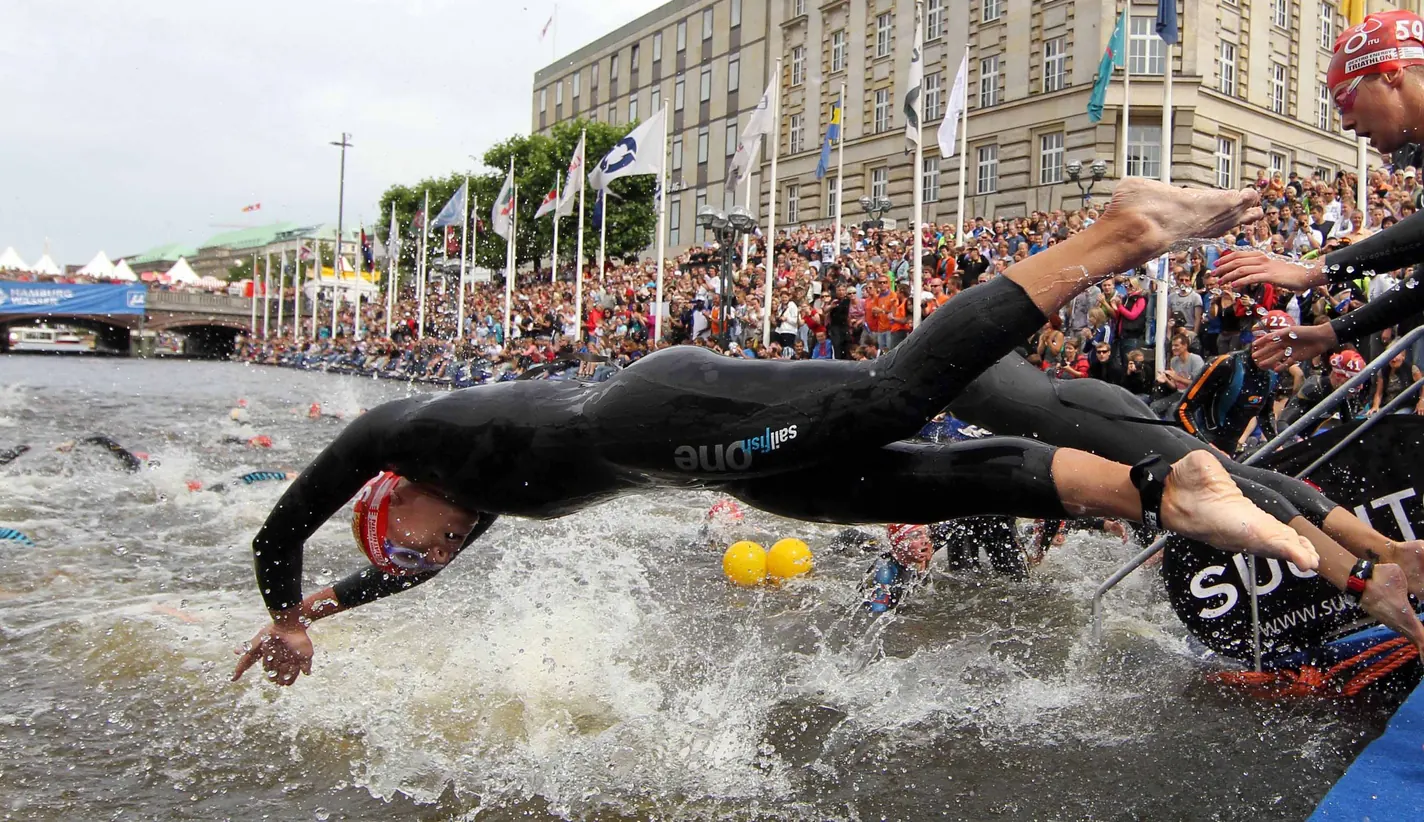
Waves, wind, current, poor visibility, difficulty keeping a straight line toward the buoy, hundreds of people around you...
Now add imperfect technique, poor buoyancy, and the fitness level of an athlete for whom swimming 2 km in a perfectly calm pool is already a challenge.
Now do you understand why amateur triathletes fear the swim leg the most?
Ironman organizers are very customer-oriented, and for good reason the swim distance in a full triathlon is quite short compared to the bike and run. They are also very lenient about wetsuits, which genuinely helps all participants.
Everything is designed to popularize triathlon.
As a Master of Sport in swimming, I remember my first triathlon start in open water...
It was embarrassing.
I came out of the water behind women who were a full minute slower than me over 800 m freestyle in the pool!
I did not know how to draft off someone's feet; I always thought I was swimming straight toward the buoy; and I kicked as if I were sprinting a 100 m pool race from the start.
With each subsequent race, experience came.
And if the fear does not fade but turns into panic mid-race, that is its own story: coming back after a panic attack in open water.
The fear of fighting for the feet of the swimmer ahead faded. I developed a proper sense of how many strokes to take before sighting, and that it is better to sight on the crest of a wave rather than in a trough. Sometimes you should let your "draft train" go if it is clearly heading the wrong way, and you should never rely on the swimmer in front of you.
At every stage of the distance, there were subtleties and nuances.
River, lake, sea, ocean — each has its own hidden pitfalls.
Some more, some less.
But you need to be prepared for them.
The good news is that it only takes one experience to get significantly better.
If you are a complete beginner in triathlon, I strongly recommend trying open water before race day.
Ideally, do a series of open-water training sessions, but since not everyone has that opportunity — and sometimes the water quality is simply unsafe — try swimming at least 1 km at race pace a few days before the event.
Without rushing, just listening to your body.
Stop, lift your head, pick a landmark.
Figure out the best way to swim when you are tired, panicking, or out of breath.
On your back or breaststroke?
Which is easier for you?
Get a feel for the distance.
Never fight the water.
It always wins.
If you have already raced and want to improve your result, confidently line up in a start wave with a corridor time slightly faster than your expected finish.
Try to find a set of feet to draft behind, and do not forget to keep sighting the buoy.
Be ready for a fast start, but try not to build up too much lactate in your legs in the first meters. Toward the end, engage your legs to speed up the transition of blood flow from horizontal to vertical.
Some of this can be practiced in the pool as well — it all depends on your coach, motivation, and training conditions.
My swim preparation consisted of 95% pool sessions and 5% river swims, and even those only happened when the pool was closed.
In open water it was very hard to "hold" my speed for the race season, but I am talking about a competitive pace of around 1:20 per 100 meters in open water.
There were also high risks of catching a cold or picking up an infection...
So you always need to weigh the risks.
Do not be afraid to experiment — the tougher the training conditions, the easier race day will feel.
Good luck and smooth water!